
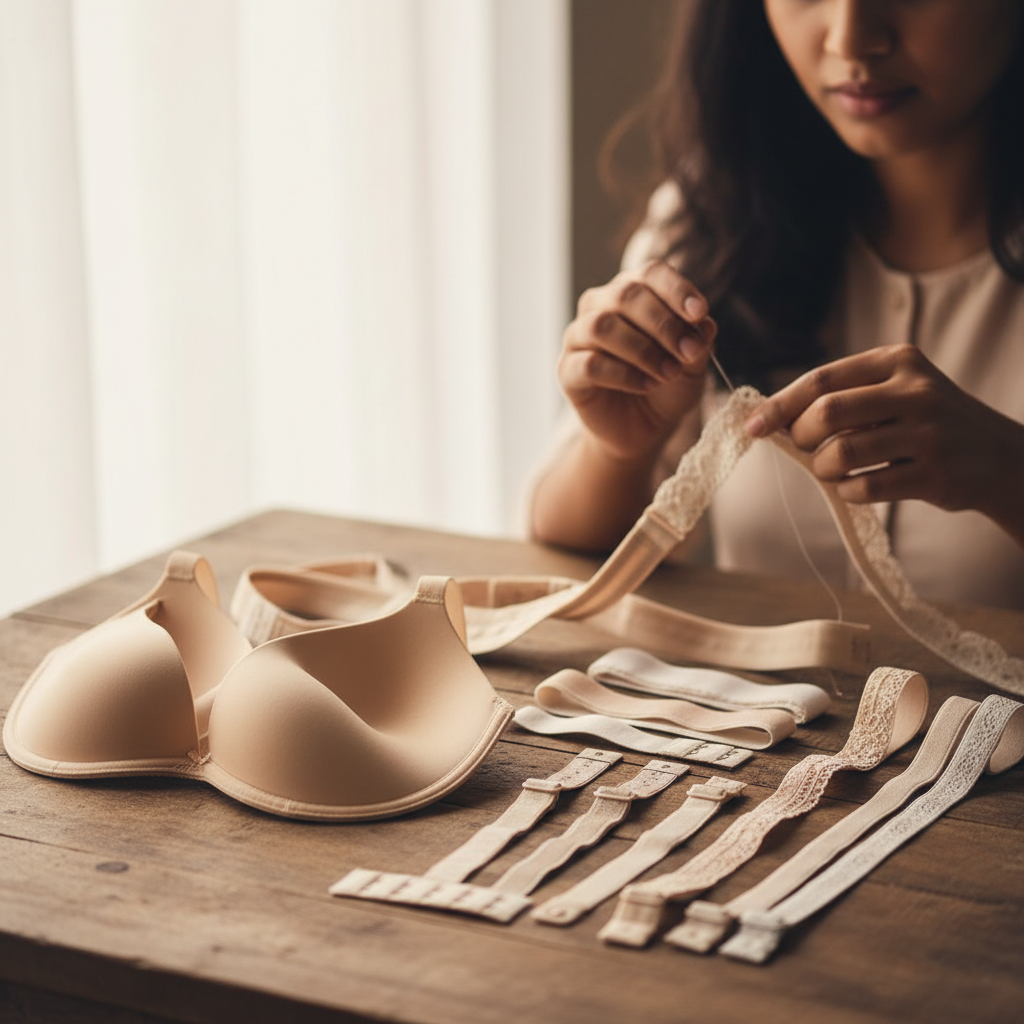
Understanding Bra Construction: Cups, Bands & Straps
Choosing the right bra goes beyond aesthetics; it involves understanding how its fundamental parts work together to provide comfort, support, and shape. This article will delve into the essential components of a bra—cups, bands, and straps—to give you a deeper comprehension of their individual roles and how they contribute to proper fit and functionality.
The Role of the Cups: Shape, Support, and Comfort
The cups are arguably the most visible part of a bra, yet they serve critical functions beyond mere appearance. Designed to hold and support the breasts, cup construction varies significantly to accommodate different breast shapes, sizes, and support needs.
Types of Cup Construction
Cups can be constructed in several ways, each affecting fit and comfort differently:
- Molded Cups: These cups are pre-shaped, often with foam padding, designed to create a smooth, rounded silhouette under clothing. Ideal for those seeking uniform shape, they provide moderate support.
- Seamed Cups: Made by stitching multiple panels of fabric together, seamed cups offer better customization to breast shape. They provide enhanced lift and contour by following the natural curves of the breasts.
- Wireless Cups: Lacking an underwire, these cups prioritize comfort while still offering light to moderate support. They often have soft linings or gentle elastic bands for shape retention.
- Push-Up Cups: Featuring extra padding or angled cups, push-up designs lift the breasts upward and inward to enhance cleavage.
Materials and Linings
The choice of fabric and lining in the cups influences breathability, softness, and durability. Common materials include:
- Microfiber – known for its smooth texture and moisture-wicking properties.
- Mesh – offers ventilation, ideal for hot climates or activewear.
- Cotton – favoured for softness on sensitive skin and everyday wear.
- Lace and embellishments – add aesthetic appeal but may reduce breathability.
Elasticity in the cup fabric also contributes to fit, accommodating minor changes in breast volume due to hormonal fluctuations or daily activities.
How Cup Size and Shape Affect Fit
Accurate cup sizing is essential. A cup that is too small causes spillage or discomfort, while one too large can lead to sagging and poor support. Breast shape—whether full, shallow, close-set, or widely spaced—also influences which cup construction is most flattering and comfortable.
Understanding the Band: The Foundation of Support
While cups receive much attention, the band is arguably the most critical element for bra support. It acts as the primary anchoring mechanism, distributing the weight of the breasts evenly around the torso.
Importance of Band Fit
The band should fit snugly but not too tight. It must be firm enough to provide most of the support, with the straps playing a secondary role. A well-fitting band lies level around the body and does not ride up at the back.
Common issues related to poor band fit include:
- Too Loose: Leads to inadequate support, making the breasts feel heavy and causing the straps to dig in.
- Too Tight: Causes discomfort, restricts breathing, and may leave marks or indentations.
Band Construction and Materials
The band typically includes strong elastic materials combined with fabrics such as nylon or spandex, allowing stretch and recovery. Many bands feature multiple rows of hooks and eyes for adjustability, accommodating slight changes in body size or shape.
Some bras include additional structural elements in the band, such as:
- Side boning: Vertical strips sewn into the band to prevent rolling and enhance smoothing.
- Power mesh panels: Reinforced fabric providing extra support without compromising flexibility.
The Relationship Between Band Size and Cup Size
Band size affects the volume that the cups need to contain. When band size changes, cup volume adjusts accordingly, maintaining proportional support. For example, a 34C and 36B technically hold similar breast volume but fit different torso circumferences. Understanding this relationship helps in selecting the right bra that balances both comfort and support.
Straps: Their Functionality and Impact on Comfort
Straps may appear secondary compared to cups and bands, but their role in fine-tuning fit and comfort is vital. While the band carries most of the support, straps keep the bra in position and prevent slipping.
Types of Straps and Their Adjustability
Straps come in various widths, materials, and configurations:
- Standard Straps: Adjustable via sliders to lengthen or shorten for a customized fit and proper positioning.
- Convertible Straps: Detachable or transformable into multiple styles (cross-back, halter) for versatility with different outfits.
- Wide Straps: Ideal for heavier busts, as they distribute weight more evenly and reduce shoulder strain.
- Padded Straps: Provide extra cushioning to minimize digging into the skin.
Correct Strap Adjustment for Optimal Support
Proper adjustment is key. Straps that are too loose will cause the bra to sag, reducing support and causing discomfort. Conversely, straps that are too tight can dig into the shoulders and create pressure points. The ideal strap length supports without bearing the entire breast weight; this should rest on the band.
Specialized Strap Designs
Some bras employ innovative strap designs that improve support or concealment under clothing, such as:
- Racerback Straps: Cross at the back to enhance lift and prevent slipping.
- Strapless Bras: Rely solely on an elasticized, firm band for support.
- Multi-way Bras: Straps that can be adjusted or removed to match various neckline styles.
Conclusion
Understanding the intricate construction of bras—specifically the cups, bands, and straps—empowers you to select styles that offer the best fit, support, and comfort. Cups shape and support breast volume, bands serve as the foundational anchor, and straps fine-tune fit and stability. Considering how these components work in harmony ensures you not only look your best but also feel confident and at ease throughout your day.




 Proudly Indian